
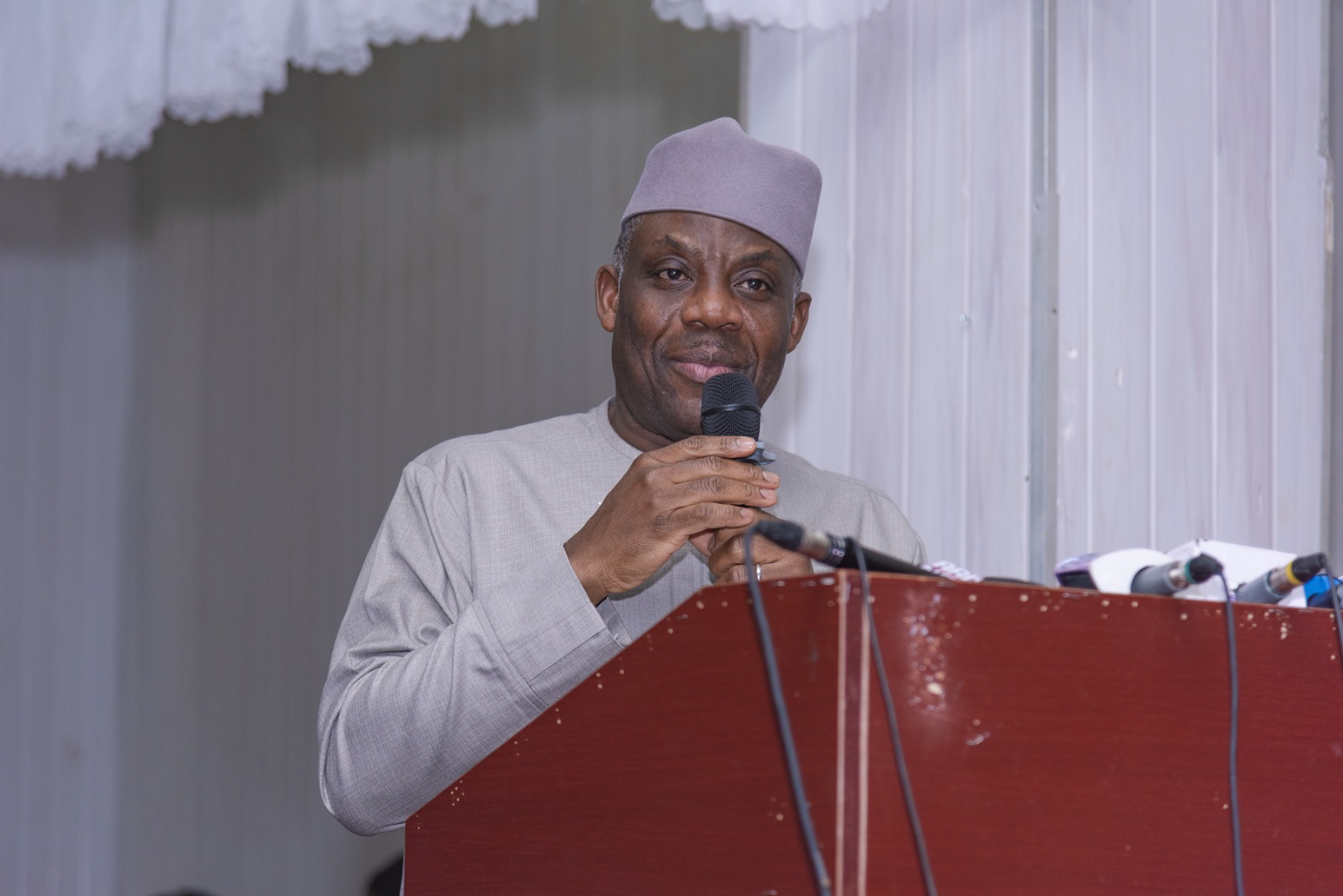
The Honourable Minister of Education (HME), Dr. Maruf Olatunji Alausa, has urged Vice-Chancellors of Nigeria’s public universities to diversify their sources of funding and reduce reliance on government allocations.
Dr. Alausa, who expressed concern over the poor resource mobilisation capacity of Nigerian universities, disclosed that only four of the 68 federal universities were currently making meaningful use of alternative funding opportunities such as research grants, endowments, alumni donations, philanthropy and industry partnerships.
He described the situation as unacceptable and charged university leaders to make resource mobilisation a central responsibility of their administrations.
The Minister spoke at the National Advancement Forum 2026, where he challenged Vice-Chancellors to move beyond the traditional practice of administering government allocations and begin actively building relationships with alumni, businesses, philanthropists, research funders and other strategic partners.
“Government funding is not enough. Universities live, function and excel on blended funding,” Alausa declared.
According to him, successful universities globally do not depend solely on public funding but deliberately cultivate networks capable of generating resources for laboratories, scholarships, research chairs, innovation programmes and other critical institutional needs.
He urged Nigerian Vice-Chancellors to emulate this model, stressing that universities possess enormous intellectual capital which, if properly deployed, could attract substantial resources from the private sector and other funding sources.
Dr. Alausa, however, stressed that the Federal Government was not withdrawing its support from tertiary institutions, noting that the administration of President Bola Ahmed Tinubu had demonstrated strong commitment to education through increased budgetary allocations, infrastructure investment and other interventions.
He said the Federal Government currently bears personnel costs in full, while universities retain 75 per cent of their internally generated revenue and continue to benefit from interventions by the Tertiary Education Trust Fund (TETFund).
“These provide a strong foundation,” the Minister said, insisting that universities must build on this by developing diversified, sustainable and resilient financing systems.
In a major policy directive aimed at strengthening fundraising capacity, Dr. Alausa directed that Advancement Offices in all universities should report directly to Vice-Chancellors rather than Registrars. He also directed the Vice-Chancellors at the forum to immediately communicate the decision to their respective institutions.
The Minister further directed that Directors of Advancement should have a minimum five-year internal tenure, renewable where appropriate, arguing that frequent changes in leadership could undermine long-term relationships with donors, alumni, industries and philanthropic organisations.
“Advancement Office operation is a professional job,” he said, describing advancement officers as professional fundraisers who require stability, institutional backing and the confidence of university management to deliver results.
Dr. Alausa also challenged universities to overhaul their alumni engagement systems by developing functional databases and deploying technology to maintain lifelong relationships with graduates within Nigeria and across the globe.
He said a properly managed alumni network could become one of the most dependable sources of long-term institutional support.
The Minister recalled that before the Tinubu administration, some research and endowment funds had been transferred into the Treasury Single Account (TSA), creating difficulties in accessing the funds and raising concerns over their management and utilisation.
He said President Tinubu subsequently directed the development of a framework permitting research and endowment accounts to be moved from the TSA to commercial banks of the institutions’ choice.
According to him, the policy was designed to provide universities with greater flexibility and improve confidence in the management of such resources.
“President Bola Ahmed Tinubu, GCFR, has met you halfway. He has given you the leverage and the opportunity to do your jobs well. You must now take advantage of it,” Alausa told the Vice-Chancellors.
The Minister expressed disappointment that many institutions had yet to take full advantage of the opportunities created by the administration, warning that universities that failed to broaden their funding base could struggle to sustain growth, research and academic excellence.
He disclosed that the Federal Ministry of Education, in collaboration with the Nigerian Higher Education Foundation (NHF), would move beyond training and capacity building to establish a comprehensive national framework for sustainable financing of tertiary institutions. The proposed framework, he said, would address endowment governance, accountability, research grants, Advancement Office structures, alumni giving, industry partnerships, philanthropy incentives, revenue management and transparency.