
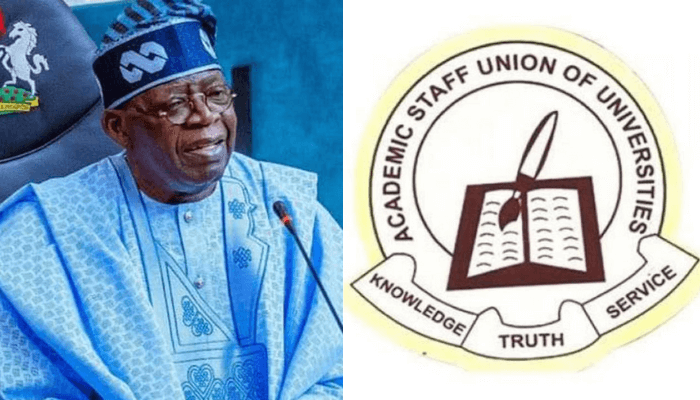
The Federal Government and the Academic Staff Union of Universities (ASUU) have concluded what many Nigerians tagged a final conclusion of the renegotiation of the 2009 FGN-ASUU Agreement.
This brings the long-running industrial relations crisis to an end after over 16 years of strikes.
The agreement between the Nigerian government and public universities lecturers was reached on December 23, 2025, following intensive engagements between both parties, and is expected to take effect from January 1, 2026, with a review scheduled after three years.
To date, Nigeria has a total of 310 federal, state, and private universities. Federal universities make up 23.9 percent of the total (74), while states make up 21.9 percent (68), and private universities make up 54.2 percent (168).
Some of the new agreements include a 40 percent salary increase for academic staff and significantly improved pension benefits. Also, under the new pension structure, professors are to retire at the age of 70 on pension equivalent to their full annual salaries, a long-standing demand of the union.
The deal also introduces a revamped university funding model with dedicated allocations for research, libraries, laboratories, equipment, and staff development.
Furthermore, the new agreement proposes the establishment of a National Research Council to fund research with a minimum of one per cent of Nigeria’s Gross Domestic Product (GDP).
It also confirmed that there is stronger university autonomy and academic freedom that formed a core part of the agreement, alongside provisions for elected academic leadership at the level of deans and provosts, positions to be occupied strictly by professors.
As the union advocates for speedy implementation, the agreement also guarantees that no member of the union will be victimised for their role in the prolonged struggle.
The union urged the government to hasten the negotiations with the other University-based Staff Unions like the Senior Staff Association of Nigerian Universities, (SSANU), Non-Academic Staff Union of Educational and Associated Institutions (NASU), and the National Association of Academic Technologists (NAAT), saying this would guarantee a rancour-free and smooth running of the university system.
Update on The Conclusion Of The Renegotiation Of The 2009 FGN–ASUU Agreement
Recall that our 2009 agreement was to be reviewed in 2012. That did not happen despite concerted efforts, negotiations, threats of strike and strike actions. Finally, the efforts of our past and present leadership and membership paid off.
The Academic Staff Union of Universities (ASUU), our union, reached an agreement with the Federal Government of Nigeria on December 23, 2025.
As earlier stated, it is the outcome of a prolonged renegotiation process initiated in 2017 to review the 2009 FGN–ASUU Agreement. The aim is to revitalise Nigeria’s University system.
The agreement focuses on conditions of service, funding, university autonomy, and academic freedom, as well as other systemic reforms aimed at reversing decay, curbing brain drain, and repositioning universities for national development.
The key agreement under Conditions of Service includes a 40 per cent upward review of academic staff emoluments. It reaffirms pension provisions under existing laws, granting professors a pension equivalent to their annual salary upon retirement at age 70 with defined service requirements and recognition of approved service periods.
On funding, the agreement proposes a new budgeting template recognising university peculiarities, with dedicated percentages for libraries, research, equipment, staff development, and laboratories.
A major highlight is the proposed National Research Council (NRC) to fund research at not less than 1% of GDP, strengthen innovation, and support research universities and centres of excellence.
The agreement strongly affirms university autonomy and academic freedom, emphasising merit-based governance, elected academic leadership (Deans/Provosts). The Provosts/Deans of Postgraduate Schools) will now be elected, with only Professors eligible to contest.
The agreement takes effect from 1st January 2026 and it will be reviewed after three years. The agreement guarantees that no individual shall be victimised for participating in the renegotiation process. It is our hope that the Federal Government will commence the implementation without delay.
I wish to appreciate the commitment of Mallam Yayale Ahmed (CFR), and the other members of the Renegotiation Team to the renegotiation of the 2009 agreement that has been dragging on for eight (8) years.
I also wish to appreciate the Minister of Education, Dr Tunji Alausa, for the renegotiation, especially the last push that we needed to cross the line.
I want to urge the government to hasten the negotiations with the other University-based Unions (SSANU, NASU, and NAAT).
The leadership of the Union extends our highest appreciation to our members for their patience and perseverance. It has been a long walk through the renegotiation. As we approach Christmas and the New Year, I wish our Christian brothers and sisters a merry Christmas and a happy New Year in advance to all.
The union has consistently explained that its frequent strikes are driven by what it describes as the Nigerian government’s lack of sincerity and its repeated failure to honor agreements previously signed with ASUU.
According to the union, these unresolved commitments leave it with little choice but to resort to industrial action.
…Impact of Strikes on Students
Although the association maintains that its actions are aimed at defending the future of Nigeria’s tertiary education system—and by extension, the welfare of students-many Nigerians see the repeated strikes differently. To them, the continuous disruptions appear harmful, self-serving, and damaging to students’ academic progress.
This perception has been further reinforced by ASUU’s inability to clearly and respectfully communicate its position to the public, often coming across as arrogant or condescending.